Kilimanjaro Packing Guide
What to Bring for Kilimanjaro
The complete packing list from a founder's own pack-out: every layer, boot, bottle, and battery carried on a 7-day Lemosho Route climb to Uhuru Peak, 19,341 feet above the African plains — photographed laid out on the floor, and explained so you know why each item earns its place.
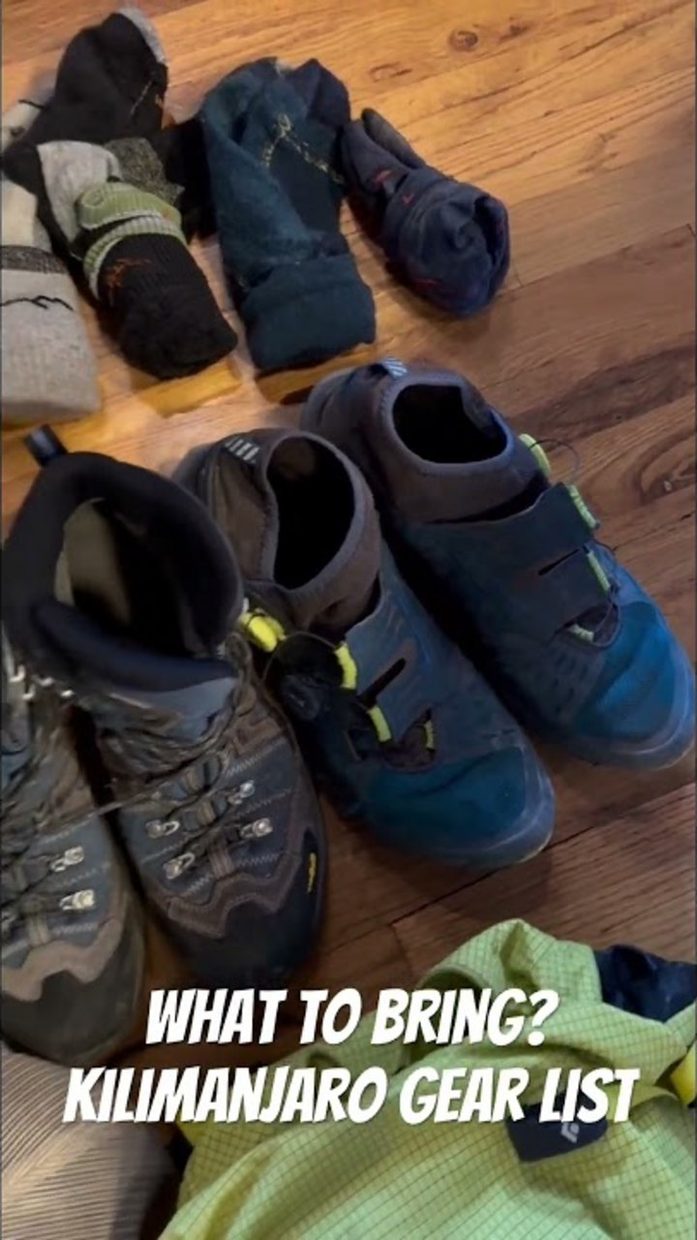
Watch Mark walk through his final pack-out before departure.
Watch “Gear List for climbing Mt. Kilimanjaro” on YouTube ↗
Kilimanjaro is often called the easiest of the Seven Summits. Do not let that fool you. In a single climb you walk through five climate zones — cultivated farmland, tropical rainforest, heath and moorland, alpine desert, and an arctic summit — and the weather can swing from hot and humid at the trailhead to snow, wind, and frost on summit night. Days are usually warm; nights at the upper camps drop to freezing and below.
That is why packing for Kilimanjaro is really about layering. No single jacket does the whole job. The list below is exactly what Mark packed for his 7-day Lemosho climb, in the quantities he packed, with the practical guidance from the Freedom Peak packing list woven in. Use it as your checklist, then adjust for your route, season, and how warm or cold you tend to run.
How to pack it: two bags, one system
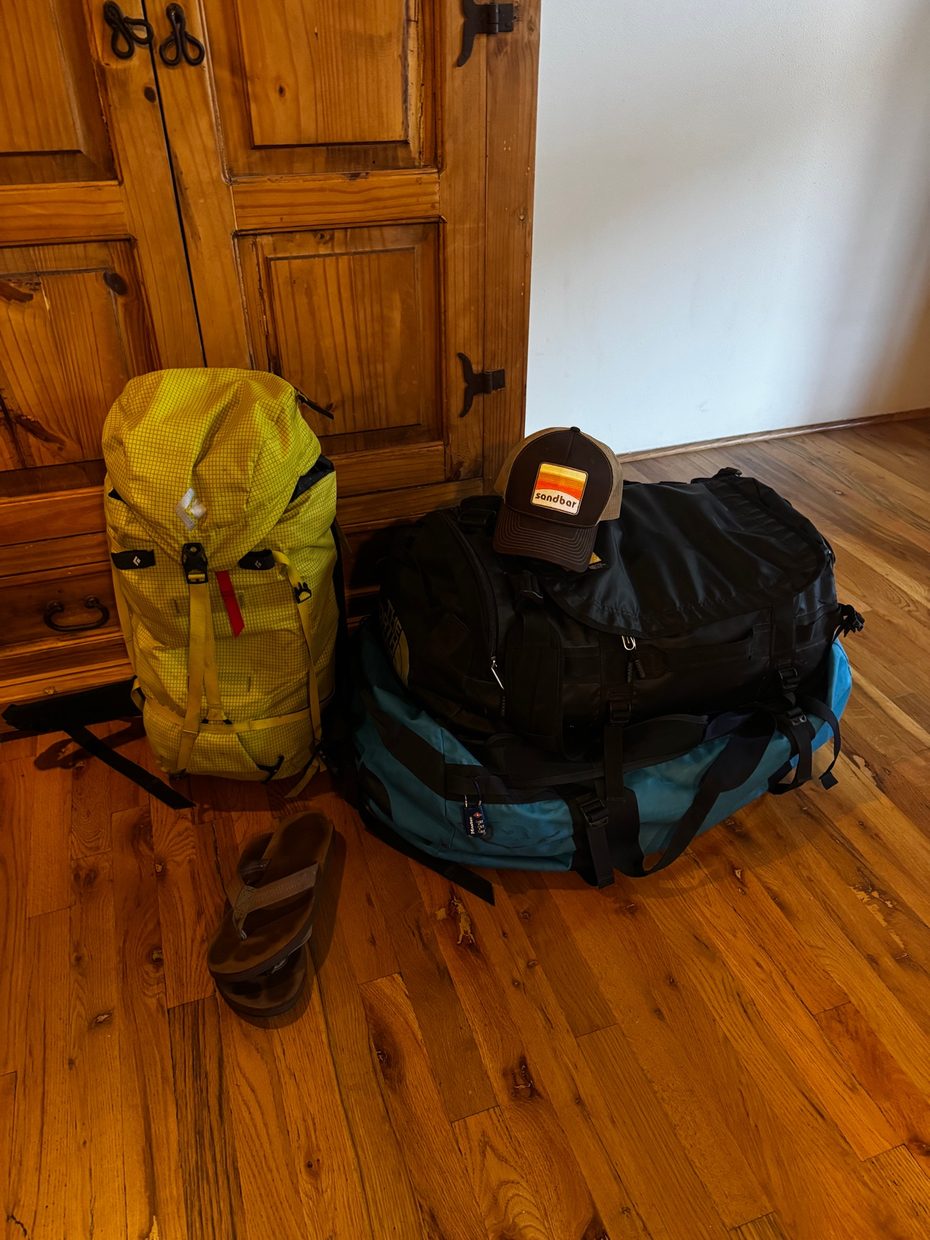
You carry one bag. A porter carries the other. Keep that split in mind from the first fold, because you will not see your duffel again until you reach camp each afternoon.
Your daypack — the 30-liter bag you hike with
Mark hikes with a 30-liter daypack every day. It holds the day's water, the layers you will add and shed, a rain cover, poles when you are not using them, sunglasses, sunscreen, snacks, your headlamp, and your camera or phone. Keep it light, make sure it fits your back comfortably, and test it on a shorter hike before Kilimanjaro. A rain cover for the pack and side pockets for bottles and poles earn their keep from day one.
Your duffel — the porter's load
Everything else goes in a soft duffel, carried by a porter. Kilimanjaro National Park regulations cap a fully loaded duffel at 15 kg, and it needs 90–120 liters of capacity to hold the whole kit. Choose a waterproof model, and pack your gear inside in large dry bags as a second line of defense — rain can find its way through zippers. Soft duffels matter: porters often carry them on their heads for 40–60 km over the course of a climb.
Rent or buy? You can hire the required gear when you arrive in Tanzania. Hiring the full kit runs roughly $250–$300, against $1,000 or more to buy everything new. If Kilimanjaro is a once-in-a-lifetime climb, renting is the pocket-friendly choice. If it is the first of many big mountains, buying your own kit starts to make sense — just check your airline's luggage allowance, since the full kit weighs roughly 15–17 kg. Freedom Peak's team in Moshi can also help with rental gear; ask when you book.
The complete Kilimanjaro packing list
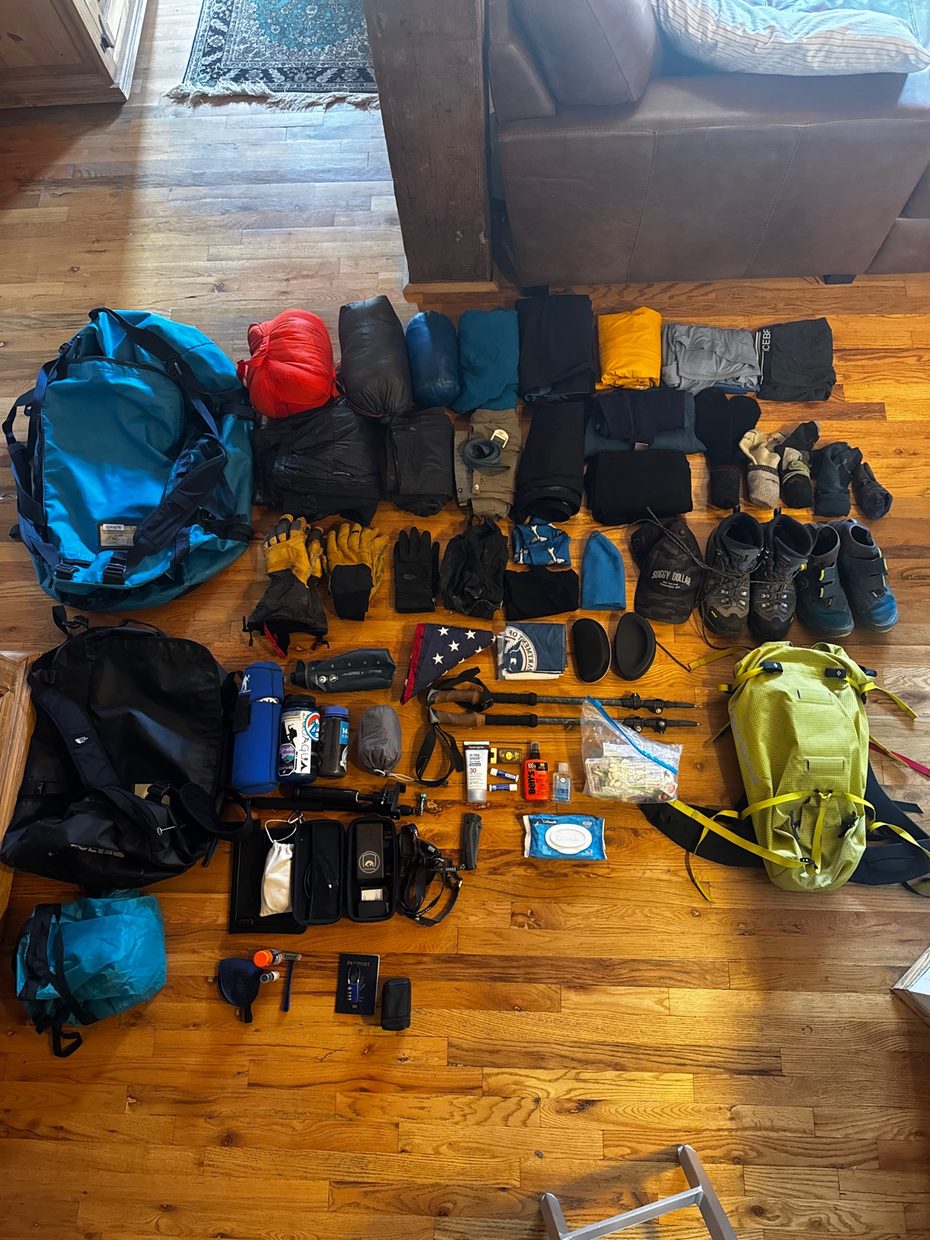
Everything Mark packed, grouped the way it gets used on the mountain. The quantities are his — three shirts, three pairs of gloves, three water bottles — because on a 7-day climb, spares are not luxury. They are how you stay dry, warm, and moving.
How to read the examples: lines labeled “What Mark used” are Mark's own kit from his Lemosho climb, listed first. The shaded boxes list other good options, drawn from 2026 gear roundups by Switchback Travel, Outdoor Gear Lab, CleverHiker, Outside, Backpacker, and Peak Gear Guide.
Leave the drone at home. Drones are not allowed in Kilimanjaro National Park.
Sleeping
- Zero-degree sleeping bagNights at the upper camps are well below freezing. A bag rated for well below freezing is essential — a comfort rating of at least −10 °C / 14 °F is the usual guidance, and warmer is never regretted. A hood helps. Sleeping bags are bulky and easy to hire in Tanzania if you would rather not fly with one.Other good optionsMountain Hardwear Lamina Z Blaze · Rab Neutrino 400 / Alpine 800 · Western Mountaineering Kodiak
Clothing — layers for five climate zones
- Mid-weight puffy jacketYour everyday insulation on the mountain — worn over a shirt or fleece, and in camp on chilly evenings.What Mark usedMountain Hardwear Nilas midweight puffyOther good optionsPatagonia Down Sweater Hoody · Rab Mythic G · Arc'teryx Cerium
- Lightweight puffy jacketA lighter insulation layer for milder cold and for layering under the hard shell when the wind picks up.What Mark usedThe North Face ThermoBall light puffyOther good optionsPatagonia Nano Puff · Arc'teryx Atom LT · Rab Microlight
- Fleece jacketThe workhorse layer. Wear it on its own, over a trekking shirt, or under a shell, and in camp at night. A hooded fleece adds warmth and comfort.What Mark usedPatagonia R1 Hoody fleeceOther good optionsPatagonia R1 · Arc'teryx Delta LT / Kyanite · Rab Ascendor
- Soft shell jacketBreathable wind protection for moving days, bridging the gap between fleece and full rain protection.What Mark usedBlack Diamond Dawn Patrol hybrid soft shellOther good optionsArc'teryx Gamma · Outdoor Research Ferrosi · Rab Borealis
- Hard shell rain jacketWindproof and waterproof — your third layer over base layer and fleece, and the jacket that should always be within reach in your daypack. Rain and snow are not unusual on Kilimanjaro, and this jacket is likely to be needed from the first day.What Mark usedThe North Face rain jacketOther good optionsArc'teryx Beta · Patagonia Torrentshell 3L · Outdoor Research Helium
- Three shirtsLight, breathable, quick-drying fabrics — polyester, nylon, or blends. Avoid cotton: it holds sweat, dries slowly, and chills you. A mix of short- and long-sleeved shirts covers the rainforest heat and the higher camps.Other good optionsSmartwool · Patagonia Capilene · Icebreaker
- Three pairs of merino boxersMerino wool wicks, resists odor over multiple days, and stays comfortable across a wide temperature range. Pack 5–6 pairs of underwear in total if you prefer a fresh pair daily.Other good optionsSmartwool · Patagonia Capilene · Icebreaker
- Two sets of base layers (thermal underwear)One lighter synthetic set for regular days, one warmer set — wool or a wool blend — for summit night. Sleeping in a base layer is also more comfortable than sleeping without one.Other good optionsSmartwool Classic All-Season Merino · Patagonia Capilene Midweight · Icebreaker 200 Oasis
- Puffy pants — just in caseInsulated trousers for the coldest hours. Mark packed them as insurance against a bitter summit morning; on a cold climb you will be glad they are there.What Mark usedMountain Hardwear Denali puffy pantsOther good optionsPatagonia DAS Light Pants · Rab Photon Pants · Arc'teryx Nuclei Pants
- Soft shell pantsWind-resistant, breathable trousers for the bulk of the trekking days.What Mark usedOutdoor Research Cirque soft shell pantsOther good optionsArc'teryx Gamma Pant · Outdoor Research Ferrosi Pant · Rab Torque Pant
- Hiking pantsGood-quality trekking trousers for the lower, warmer days. If you prefer hiking in shorts, still pack trousers for higher elevations and chilly evenings in camp.Other good optionsprAna Stretch Zion · Arc'teryx Gamma · Patagonia Quandary
- Rain pantsMembrane rain trousers, worn over hiking pants. Especially valuable in the rainy season, and a real wind barrier even when it is dry.Other good optionsPatagonia Torrentshell 3L Pant · Arc'teryx Beta Pant · Outdoor Research Foray
- Assortment of merino wool socksWool socks wick sweat and help prevent blisters. No cotton socks. Add a pair of warmer thermal socks for summit night.What Mark usedDarn Tough socksOther good optionsSmartwool · Icebreaker · Bridgedale
Head, hands & feet
- Boots for the summitSturdy, waterproof hiking boots with good ankle support and medium weight — not so heavy your feet tire early. Speed hooks on the laces help. Most important of all: break them in over several hikes before the trip. Brand-new boots on Kilimanjaro mean blisters and sore feet. Take at least two long hikes in them first.What Mark usedAsolo bootsOther good optionsSalomon Quest 4 · La Sportiva Nucleo High II GTX · Lowa Renegade GTX Mid
- Hiking shoes for the first couple of daysLighter trekking shoes for the gentler early days, and welcome relief for your feet around camp once the boots come off.Other good optionsSalomon · Merrell · La Sportiva
- BeanieWarm enough for the low temperatures and snow of the summit zone — your head and ears need it from the higher camps upward.Other good optionsSmartwool · Buff · Outdoor Research
- BalaclavaWool or similar, for wind protection over chin, nose, cheeks, and forehead on summit night. You may not use it anywhere else — and you will not mind carrying it.Other good optionsSmartwool · Buff · Outdoor Research
- Buff / neck warmerProtection for neck and face in the cold, and a useful barrier against dust on the dry trails lower down.Other good optionsBuff · Smartwool · Outdoor Research
- GaitersKeep mud, snow, and pebbles out of your boots, and protect your trousers and boots from Kilimanjaro's sharp rocks. Indispensable in the rainy season. They were most useful coming down the scree on summit day, keeping loose rocks out of Mark's boots.Other good optionsOutdoor Research · Black Diamond · REI Co-op
- Three pairs of gloves, including summit glovesLightweight inner gloves for the early days, plus warm, waterproof outer gloves or mittens for summit night — you will be holding trekking poles for roughly eight hours in temperatures down to −15 °C / 5 °F, so mittens, which keep fingers together, are often the warmer choice.Other good optionsBlack Diamond Guide Glove / Mercury Mitt · Outdoor Research Alti II Mitts · Hestra Army Leather Heli
- Two pairs of sunglasses, including Oakley VanguardsMountain sunglasses with strong UV protection — category 3, or better, category 4. At nearly 6,000 m the UV is far stronger than at sea level, and snow reflects it back at your eyes. Wear them near the summit even when it is cloudy: snow blindness is a real risk and can cause lasting eye damage. A spare pair is cheap insurance against loss or breakage.What Mark usedOakley VanguardsOther good optionsJulbo Explorer 2.0 · Oakley Flak 2.0 · Smith Lowdown 2
- Sun hatsA sun hat with a neck cover protects face and neck from sunburn and overheating on the lower, hotter days.Other good optionsOutdoor Research · Sunday Afternoons · Patagonia
Water & hydration
- Three water bottles — 1.5L, 1L, and 0.5LYou need to drink 3–4 liters a day at altitude. Bottles, unlike some hydration bladders, will not freeze overnight. The 0.5L bottle is for hot drinks — Mark did not use it on the hike.Other good optionsNalgene · Hydro Flask · Yeti
- Hydration pack / bladder, already in the daypackFor sipping on the move. Choose a quality model with an insulated tube, or the tube can freeze on summit night.Other good optionsOsprey Hydraulics · CamelBak · Platypus
- Water purifier, just in caseMark did not use the purifier on the climb, because Freedom Peak always provided enough clean water for the day. He still packs it as a backup because he is cautious — and “be prepared” is the company motto.Other good optionsSawyer Squeeze · Katadyn BeFree · MSR Guardian
On the trail
- 30-liter daypackThe bag you hike with every day — see “How to pack it” above. Keep it light and comfortable, with a rain cover.Other good optionsOsprey Talon 33 / Skarab 30 · Deuter Speed Lite Pro 30 · Gregory Zulu 30
- Rain cover for the backpackRain can start fast on Kilimanjaro. A cover keeps the contents of your daypack dry; dry bags inside the duffel do the same job for the porter's load.What to look forYour pack maker's own rain cover, sized to your pack — or Sea to Summit
- Hiking polesTwo poles take real strain off knees and joints over 7–10 km a day on rugged, rocky terrain — and they are at their most valuable on summit night, when fatigue sets in. Look for adjustable aluminum poles around 400 g with cork or foam grips, sized to your height.Other good optionsBlack Diamond Alpine Carbon Cork / Distance Carbon Z · LEKI Legacy Lite / Makalu · MSR Dynalock Ascent Carbon
- FlagsMark carried flags for the summit photo — the small, personal touch that marks the top of Africa. Pack them where they will stay dry and uncreased.
Toiletries, sun & small essentials
- ToiletriesThe basics, packed small. There are no showers on the mountain — wet wipes (one small pack in the daypack, one larger pack in the duffel) handle evening hygiene.What to look forTravel-size basics, unscented wet wipes, and zip-sealed bags to keep everything dry
- SunscreenHigh-factor, for face and hands. The equatorial sun at altitude burns fast, even on overcast days.What to look forSPF 50 broad-spectrum, water-resistant sunscreen for face and hands; reapply at altitude
- Bug sprayFor the rainforest zone and the lower camps, where insects are part of the landscape.What to look forDEET or picaridin bug spray — Ben's is visible in Mark's flat-lay photo
- Hand sanitizerFor meals, snacks, and general hygiene when water and soap are not at hand.What to look forAlcohol-based hand sanitizer, 60% alcohol or higher, in a travel-size bottle
- KnifeA small pocket knife for camp tasks and repairs. Pack it in checked luggage for the flight, never in a carry-on.Other good optionsVictorinox Swiss Army · Leatherman
Electronics & power — there are no outlets on the mountain
There is nowhere to plug in on Kilimanjaro. Every charge has to come from something you carried up, so power is part of the packing list, not an afterthought.
- Headlamp + extra batteriesMark takes two headlamps: his primary headlamp, plus an ultralight headlamp as backup. Essential for finding your way around camp after dark, and for the midnight summit push, when climbers typically start around midnight to reach Uhuru Peak by sunrise. Look for 90–100+ lumens and a 40–50 m beam, and carry extra batteries — the backup matters most if the primary fails on the most important night of the climb.Other good optionsPetzl Actik Core · Black Diamond Spot 400 · Nitecore NU25 — the NU25 class is the ultralight backup style
- Solar panelTrickle-charges battery packs during the day's walk and in camp, stretching the power you carried.Other good optionsAnker · BioLite · Goal Zero
- Two battery packsFor phone, camera, and GoPro. With no outlets on the mountain, battery packs are the only way to keep devices charged for the whole climb.Other good optionsAnker · BioLite · Goal Zero
- GoProFor summit footage and the moments a phone stays pocketed for. Bring spare batteries — cold drains them faster.Other good optionsGoPro Hero · DJI Osmo Action · Insta360 Ace Pro
- Power converterFor charging everything before and after the climb in Tanzania, where plug types and voltage differ from home. Confirm the type you need before you fly.What to look forUniversal travel adapter covering Type G (three-pin, UK-style) for Tanzania, 230V, with USB charging
Personal medications — Mark's own kit
Not medical advice. The medications below are Mark's personal kit, prescribed for him. They are prescription medications. Talk to your own doctor well before a climb about altitude, antibiotics, and anything else you might need — and bring any personal medication you require, as medicines easily bought at home may be unavailable in Tanzania. Guides carry a medical kit for common problems such as headache, nausea, and stomach upset, but your own prescriptions are your responsibility.
- DiamoxMark's personal prescription for altitude. Discuss altitude medication with your own doctor before you travel.
- Z-PakMark's personal prescription antibiotic, carried as part of his own medical kit.
- CiproMark's personal prescription antibiotic, carried as part of his own medical kit.
Travel documents & camp extras
Visible in Mark's flat-lay photo, and easy to forget in the focus on mountain gear:
- PassportKeep it with you and protected from rain — in a dry bag or sealed pouch inside your daypack.
- Camp shoes / sandalsSomething light to slip on around camp after a day in boots. Your feet will thank you.Other good optionsCrocs · Teva · Chaco
Use the buttons above to take the list with you while you shop and pack. Nothing is saved anywhere — the list is generated from this page in your browser.
Before you go
Two things to sort before you fly: break in your boots and sort your insurance. Boots need several hikes — at least two long ones — before Kilimanjaro, or the mountain will break them in for you, painfully. And expedition insurance is not the same as ordinary travel insurance: check that your policy covers trekking to 19,341 ft, medical treatment, and helicopter evacuation, and read Freedom Peak's expedition insurance guide before you buy. See also the Kilimanjaro climb pages for routes, dates, and prices, including the 7-day Lemosho Route Mark climbed.
Finally, pack the night before with the flat-lay method: lay everything out, check it against this list, then pack the duffel and the daypack separately. If it is not on the floor, it is not going up the mountain — and at 3 a.m. on summit night, you will be glad every item above made the cut.
Frequently asked questions
How big should my Kilimanjaro daypack be?
30 liters. That is the size Mark hikes with. It carries the day's water, layers, rain cover, poles, sunglasses, sunscreen, snacks, headlamp, and camera — everything you need between camps while a porter carries your duffel.
Can I rent Kilimanjaro gear instead of buying it?
Yes — and for many climbers it is the smarter choice. Gear can be hired in Tanzania for roughly $250–$300 for the full kit, versus $1,000 or more to buy everything new. Renting suits a once-in-a-lifetime climb; buying suits a climber who plans to keep going to more big mountains. Heavy, bulky items — sleeping bag, down jacket, trekking poles — are the easiest wins to hire even if you own the rest.
How cold does it get on the Kilimanjaro summit?
Well below freezing, with wind and possible snow. For his climb, Mark checked a summit forecast of around 19°F at its warmest and about 5°F at its lowest. Forecasts vary by date and season, so pack for well below freezing regardless — puffy layers, puffy pants, warm gloves, beanie, balaclava, and a zero-degree bag.
What sleeping bag rating do I need for Kilimanjaro?
One rated for well below freezing. Mark carried a zero-degree sleeping bag, and a comfort rating of at least −10°C / 14°F is the usual guidance for the upper camps. A hood helps, and a liner can add a few degrees if your bag is marginal.
Climb Kilimanjaro with Freedom Peak
Groups of no more than 8 climbers, WFR-certified local lead guides, daily medical checks, and personal pre-trip support from Mark himself — including a gear check against this list before you fly. Tell us what you are dreaming about, ask anything, and find out if this adventure is right for you.
Book a free call with Mark Email allsevensummits@gmail.com
Questions about the climb, the route, or this packing list? Email allsevensummits@gmail.com or call Mark at (310) 465-6178. See routes and prices on our Kilimanjaro Routes page.